Office for Human Research Protections(OHRP) Research Ethics Video Series
Common Rule ABCs
This webinar provided an overview of the Common Rule, detailing ethical considerations and federal regulations for human research protections. It discussed the historical context of unethical research (e.g., Tuskegee Syphilis Study), the development of the Belmont Report, and the regulatory framework established under the Common Rule. The session also covered OHRP's role in compliance oversight, the responsibilities of Institutional Review Boards (IRBs), and institutions’ flexibility in applying the Common Rule.

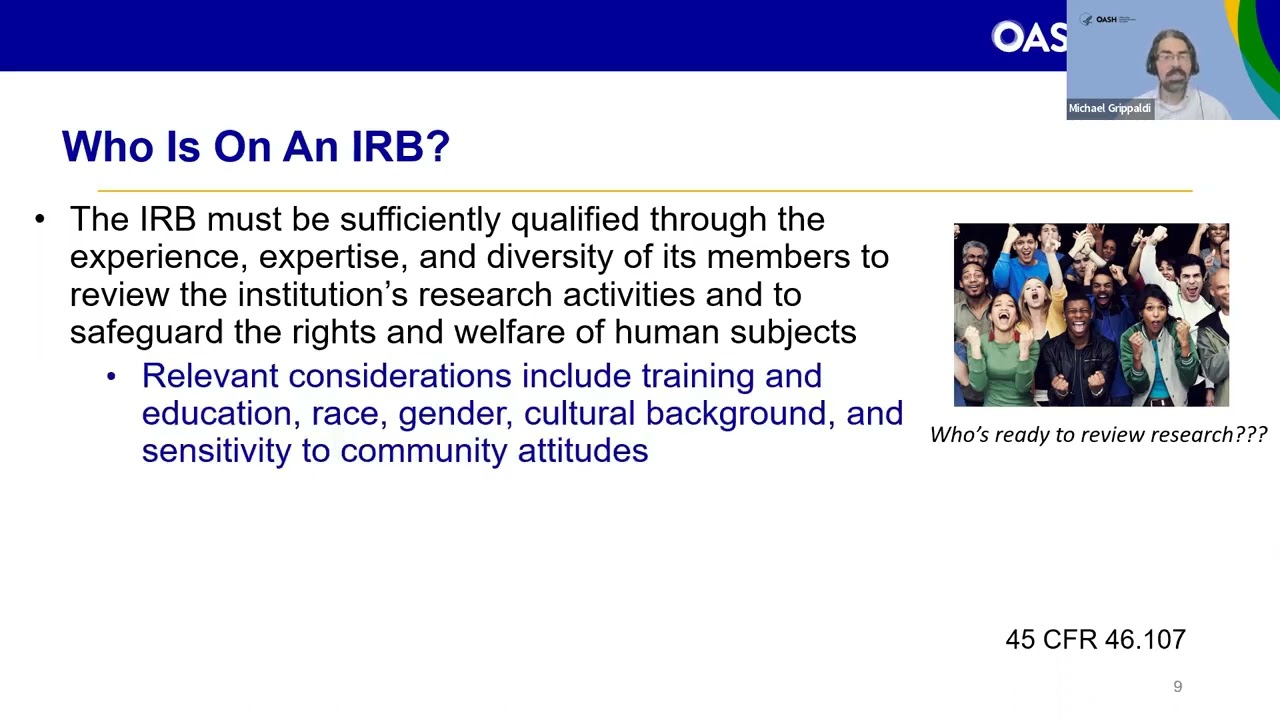
IRB Membership & Meetings
This webinar covered the composition and functioning of Institutional Review Boards (IRBs), including membership requirements, quorum, voting, and best practices for IRB operations. It explained the role of scientific and non-scientific members, the need for diverse representation, and the responsibilities of IRBs in reviewing human subjects research.
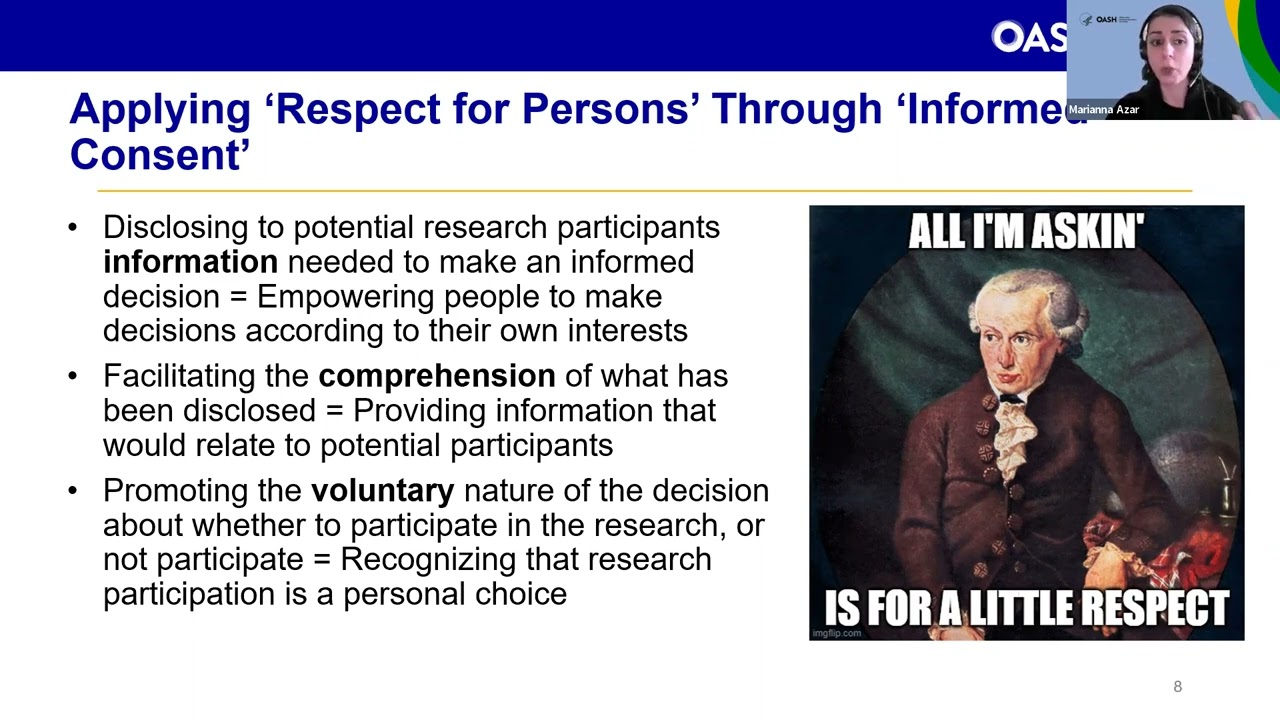
Informed Consent
This session explored ethical and regulatory requirements for obtaining informed consent in research. It addressed principles from the Belmont Report and Immanuel Kant’s philosophy, emphasizing respect for persons, autonomy, and voluntariness. The discussion included best practices for designing clear and accessible consent forms and the importance of transparency regarding time commitments and risks.
Institutional Engagement in Research
This webinar defined institutional engagement in non-exempt human subjects research funded by HHS. The session covered criteria for engagement, federal-wide assurance (FWA) requirements, and single IRB review for multi-institutional studies.
Individuals holding the Certified IRB Professional (CIP®) credential can earn 1 continuing education credit towards their CIP® recertification for watching this webinar. Please refer to this webpage for guidelines on suitable documentation for videos.

Data Repositories (Part 1)
This webinar provided an overview of secondary research with data and biospecimens, distinguishing it from primary research. The session explained how the Common Rule applies to secondary research, IRB review requirements, and exemption categories, particularly exemption 4, which allows certain secondary research without IRB review.
Individuals holding the Certified IRB Professional (CIP®) credential can earn 1.25 continuing education credits towards their CIP® recertification for watching this webinar. Please refer to this webpage for guidelines on suitable documentation for videos.

Data Repositories (Part 2)
Building on Part 1, this webinar focused on research repositories, their acceptance, storage, and distribution of data and biospecimens. The session discussed IRB oversight, exemption categories (4, 5, 7, 8), and the use of broad consent for secondary research.
Individuals holding the Certified IRB Professional (CIP®) credential can earn 1 continuing education credit towards their CIP® recertification for watching this webinar. Please refer to this webpage for guidelines on suitable documentation for videos.
